




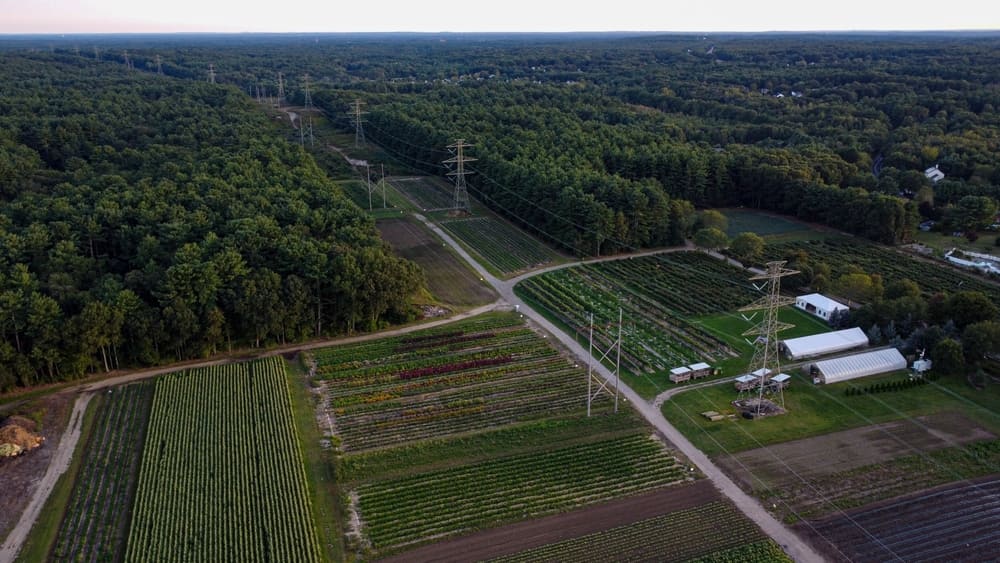
Massachusetts landowners hold a valuable asset that many haven’t fully considered: their unused land. The Bay State’s aggressive push toward renewable energy has created a surge in demand for solar development sites, turning idle acres into income-generating opportunities. Property owners across Massachusetts are capitalizing on this trend, partnering with solar developers to generate predictable revenue streams while supporting the state’s clean energy transition.
How the Solar Landscape is Changing in Massachusetts
Massachusetts has cemented its position as a renewable energy powerhouse in the Northeast corridor. The state ranks 13th nationally for total installed solar capacity, a testament to its sustained commitment to clean power development. In 2024 alone, $834 million flowed into Massachusetts solar projects, contributing to a cumulative investment exceeding $13.4 billion across the state.
The momentum shows no signs of slowing. Industry projections forecast an additional 2,127 megawatts of solar capacity coming online over the next five years, creating substantial demand for developable land throughout the Commonwealth. Currently, solar installations generate enough electricity to power approximately 952,332 homes and supply 25.75% of Massachusetts’ total electricity consumption.
8 Benefits of Leasing Your Land for Solar in Massachusetts
Dependable Long-Term Revenue
Entering a solar land lease means securing fixed payments that span decades, typically 25 to 40 years. This arrangement differs fundamentally from agricultural tenancy, where income varies with market fluctuations and seasonal uncertainties. Solar lease agreements establish clear payment schedules with built-in annual increases, usually ranging from 1.5% to 2.5%, protecting your income against inflation.
Turn Problem Property into Profit
Not all land serves agricultural or development purposes effectively. Rocky terrain, marginal soils, or challenging topography often leave property owners with acres that generate little return. Solar developers actively seek these overlooked sites, transforming them into productive assets without costly land improvements.
Soil Restoration Benefits
Placing land under solar lease gives exhausted soils time to recover from years of intensive farming. Panel coverage moderates temperature extremes, shields soil from erosive rainfall, and supports beneficial ground cover vegetation. When the lease term expires, many landowners find their soil condition has markedly improved.
Dual-Use Income Potential
Modern solar installations increasingly accommodate simultaneous agricultural activity through agrivoltaic designs. Sheep grazing beneath panels provides vegetation management while generating additional farm income. Beekeeping operations thrive in solar farm environments, and shade-tolerant crops can flourish in the altered microclimate.
Developer-Funded Installation
Solar land leasing requires no capital investment from property owners. Developers absorb all costs associated with engineering, permitting, equipment procurement, installation, and utility interconnection. This structure eliminates financial exposure while allowing you to benefit from solar development.
Hands-Off Operations
Once operational, solar installations run with minimal human intervention. Developers retain complete responsibility for monitoring system performance, conducting preventive maintenance, and managing repairs. Your role involves simply providing land access and collecting lease payments.
Lower Energy Costs for Neighbors
Community solar programs emerging from land lease arrangements provide local residents and businesses with access to renewable energy at favorable rates. Your participation helps neighbors reduce their electricity expenses while supporting small businesses in your area.
Strengthened Power Infrastructure
Distributed solar generation bolsters grid resilience by diversifying power sources and reducing transmission distance. Local generation capacity helps stabilize the electricity supply during high-demand periods and provides backup capacity during grid disruptions.
The Process of Solar Land Leasing in Massachusetts
Initial Site Evaluation
Solar developers analyze your property’s development potential through comprehensive feasibility assessments. U.S. Light Energy examines solar exposure, available acreage, topography, and development constraints to determine whether your land suits solar installation.
Utility Connection Review
Developers assess distance to three-phase power lines, available capacity at nearby substations, and interconnection pathways to ensure the grid can absorb power generated by a potential solar installation on your property.
Environmental Evaluation
Development teams conduct environmental due diligence to identify protected resources, wetland boundaries, and habitat considerations that might influence project design or require special permitting attention.
Zoning and Permitting Analysis
Solar projects must comply with local land use regulations, which vary across Massachusetts municipalities. Developers research applicable ordinances and special permit processes to map a viable pathway through the approval process.
Preliminary Agreement
Following successful feasibility confirmation, developers typically propose option agreements that secure land rights while they advance permitting and interconnection applications. These options include compensation to landowners and establishing framework terms for the eventual full lease.
Full Lease Agreement
When developers secure utility interconnection approval and necessary permits, option agreements transition to comprehensive ground leases. This milestone triggers increased payment levels as the project moves toward construction.
Construction Management
Developers orchestrate all construction activities, from site preparation through equipment installation and final grid connection. This phase typically spans six to twelve months. Landowners receive construction-phase payments while developers manage all contractor relationships.
System Activation
Project completion marks the transition to full operations. Solar arrays begin feeding electricity to the grid, and landowners receive full operational lease payments with most agreements structuring payments to increase annually.
Discover Massachusetts Solar Opportunities with U.S. Light Energy
U.S. Light Energy (USLE) brings over three decades of solar development expertise to Massachusetts landowners seeking to monetize their holdings through community solar partnerships. We manage the entire development lifecycle, from initial assessment through long-term operations, simplifying your involvement in renewable energy.
USLE’s experienced team navigates utility coordination, permitting processes, and community engagement to streamline project development and accelerate your path to operational income. Curious whether your Massachusetts property qualifies for solar development? Apply for land leasing today to receive a professional assessment of your land’s solar potential and discover how partnering with U.S. Light Energy can generate decades of stable income. U.S. Light Energy is leading the charge for a new generation.
References: