
A new state law has opened the door for Maryland landowners, making it easier than ever to turn idle acreage into a long-term income source. The Renewable Energy Certainty Act (HB1036), now in effect, cuts months of red tape out of the solar approval process. With the state pushing hard to hit its clean energy targets, developers are scouting qualifying parcels across Maryland to meet the demand.
Maryland’s Renewable Energy Certainty Act Explained
The Renewable Energy Certainty Act is a 2025 Maryland law that streamlines the approval process for small and mid-sized solar energy projects across the state. Signed by Governor Wes Moore in May 2025 and effective July 1, 2025, HB1036 alters how the Public Service Commission reviews solar applications and creates a new distributed generation certificate of public convenience and necessity for qualifying systems.
For landowners, the most meaningful change involves projects between 1 megawatt (MW) and 5 MW. Under the new law, these projects no longer need conditional use approval in most cases, removing a step that previously added significant time and unpredictability. Local governments now follow a standard review process, with clear setback rules, landscaping buffer guidelines, and decommissioning agreements built into the framework.
Why Solar Development is Growing Across Maryland
Maryland needs more solar to meet its renewable energy goals, and HB1036 gives developers a clearer path to building it. The state’s Renewable Portfolio Standard sets a target of 50% renewable energy by 2030, with solar carrying a meaningful share of that goal.
Demand for community solar projects continues climbing because utilities, businesses, and local subscribers all want access to cleaner, lower-cost power. Maryland gets consistent sunshine, has developed grid infrastructure, and benefits from supportive policy. The Investment Tax Credit (ITC) covers 30% of installed project costs for community solar developers, with bonus adders available for projects serving low-income communities. Developers want to lock in qualifying sites before the July 2026 construction deadline closes that window.
How Energy Policy Drives Demand for Solar Land
State energy policy directly shapes how much solar land developers need. When Maryland sets a renewable energy goal, developers have a finite amount of time to find suitable parcels, secure grid connections, and build.
HB1036 speeds that process up by giving developers more predictability. Clearer timelines and consistent local rules make projects easier to finance and faster to build. The result is more attention on Maryland properties that might have been overlooked before.
The Role of Community Solar in Maryland’s Energy Future
Community solar plays a central role in Maryland’s clean energy strategy because it brings the benefits of solar to renters, low-income households, and small businesses that cannot install panels on their own roofs. Subscribers receive credits on their electric bills based on the energy produced by a shared local project, lowering monthly costs without any upfront investment.
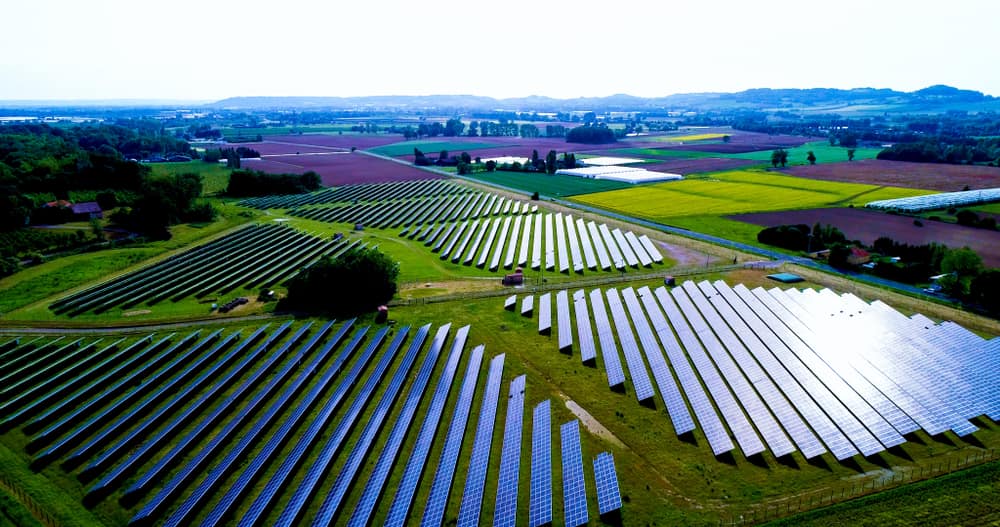
The electricity your land produces stays in the local region, and many of these projects support agrivoltaics, leaving room for sheep grazing, pollinator habitats, or limited crop production alongside the panels. That means your acreage can keep contributing to the local economy in more than one way, generating clean energy and lease income while staying productive.
What Landowners Should Know About Solar Development in Maryland
The path to a solar lease is more straightforward than it used to be, but the fundamentals haven’t changed. Three things make or break a deal: good land, a nearby grid connection, and an experienced developer to bring the project to life.
Ideal sites include 20 acres or more of relatively flat, dry land near existing power lines and substations. Wetlands, steep slopes, and heavy forestation can limit how much of a parcel is usable, though they do not always disqualify a property. A reputable developer handles the feasibility study, environmental review, permitting, and construction, all at no cost to the landowner.
Lease terms generally run 25 to 40 years, with annual payment escalators built in to keep pace with inflation. Once construction wraps, the landowner collects steady payments without managing equipment or coordinating maintenance.
Explore Leasing Land for Solar in Maryland with USLE
U.S. Light Energy (USLE) partners with Maryland landowners to turn underused acreage into reliable, long-term revenue through community solar development. Our team brings over 30 years of combined solar and real estate experience, handling every step from initial feasibility to project commissioning. We evaluate utility infrastructure, environmental considerations, and local zoning so you don’t have to.
Leasing your land for solar with USLE means decades of stable, passive income, no upfront costs, and a development partner that takes care of permitting, construction, and operations. Your land continues working for you while supporting Maryland’s transition to clean energy.
Apply for land leasing today to find out if your property qualifies. U.S. Light Energy is leading the charge for a new generation.
References:
- https://www.howardcountymd.gov/planning-zoning/renewable-energy-certainty-act-hb1036
- https://psc.maryland.gov/regulated-utilities/electricity/cpcn/
- energy.maryland.gov/pages/info/renewable/solar.aspx
- seia.org/initiatives/tax-policy/
- www.solar.com/learn/senate-releases-updated-one-big-beautiful-bill-text-what-it-means-for-solar/