



Solar farm leases and battery energy storage system (BESS) leases are two distinct opportunities, and most rural properties qualify for one far more easily than the other. Both can be a smart way to earn long-term income from your land. Understanding how each project uses land, structures payments, connects to the grid, and accommodates other land uses makes it easier to evaluate any offer that comes your way.
What is the Difference Between Solar Farm Development and Battery Storage Projects?
Solar farms produce new electricity, while BESS projects move existing electricity around. A solar farm uses photovoltaic panels to convert sunlight into power that flows directly into the local utility network. A BESS facility, by contrast, works like a giant rechargeable unit. It pulls power from the grid when demand is low and releases it back when demand spikes. Both technologies play important roles in the renewable energy ecosystem. Solar farms add clean generation capacity, while BESS facilities help balance supply and demand on the grid, which is increasingly valuable as more renewable energy comes online.
How Land Requirements Differ for Solar Farms and Battery Storage Sites
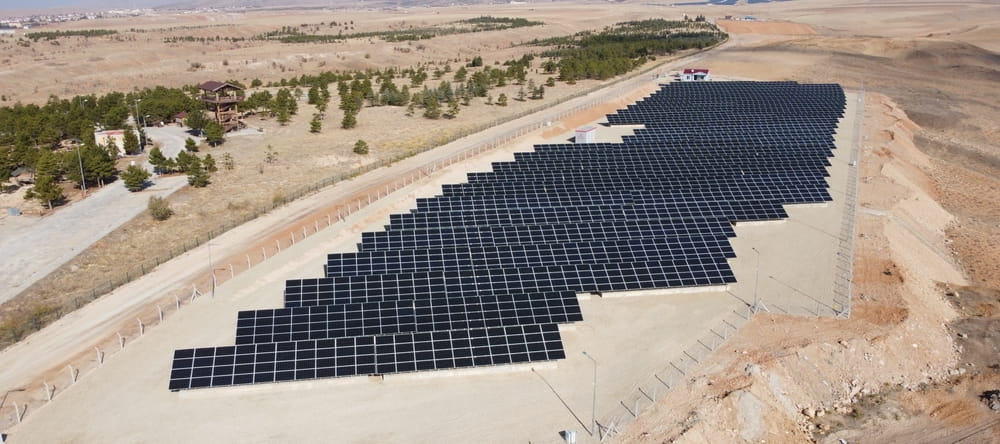
Solar farms spread their equipment across open acreage, while BESS facilities pack everything into a tight space. A typical community solar project benefits from at least 20 acres of dry, flat land with good sun exposure. BESS sites can fit on just one to two acres because the equipment is housed in compact units. Smaller footprint sounds appealing, but it also means BESS developers screen properties on exact location, accessibility, and proximity to high-voltage infrastructure rather than total acreage. A 50-acre rural parcel that’s well-suited for community solar may not be a fit for a standalone BESS project. In some cases, developers pair the two technologies on the same site, combining solar generation with on-site storage to make better use of the grid connection.
How Renewable Energy Lease Agreements are Structured
Solar and BESS leases share a lot in common. Both are long-term agreements that generally run 20 to 40 years, both pay landowners on an annual basis, and both typically include an option period, a construction phase, and a long operational phase. Solar leases also commonly include built-in escalators in the range of 1.5% to 2.5% to help payments keep pace with inflation over the life of the lease, and many BESS leases include similar inflation-linked adjustments.
Specific terms vary by developer, project size, and location, so any offer is worth reviewing carefully with a qualified attorney before signing. The bigger differentiator between the two opportunities tends to be siting and qualification, not lease structure.
Why Battery Storage Projects are Highly Location Dependent
BESS developers will only consider properties that sit within close range of major grid infrastructure, which can rule out many parcels. These projects must connect to high-capacity substations or transmission lines because their entire purpose involves moving large amounts of electricity in and out of the grid quickly. BESS sites generally need to be within half a mile of a substation, while solar farms can be a mile or two from suitable interconnection points.
Solar farms have far more flexible siting criteria. Three-phase power lines and reasonable substation capacity are usually enough to make a project work. That flexibility opens the door for landowners across a much wider geographic area, including farmland and rural parcels that BESS developers might pass on entirely.
Which Renewable Energy Project Type is Right for Your Property?
Three factors matter most when deciding between solar and BESS: how much land you have, how close your property is to grid infrastructure, and how much flexibility you want from your land.
Solar farm leases work well for landowners with larger parcels. If you have 20 or more acres of flat, dry land within reasonable proximity to existing utility lines, solar lets you put unused or underproductive acreage to work while still keeping parts of it productive through agrivoltaic practices like sheep grazing, beekeeping, or pollinator habitat.
BESS sites work differently. They use a much smaller footprint, but they need to sit very close to major grid infrastructure like substations and high-voltage transmission lines, which favors industrial or semi-industrial parcels over agricultural land. Fenced enclosures and active equipment also leave little room for grazing, pollinator habitat, or other productive land uses alongside the project.
Evaluating Your Property for Renewable Energy Leasing
U.S. Light Energy (USLE) partners with landowners to turn unused acreage into reliable, long-term income through community solar development. With over 30 years of solar and real estate expertise, our team handles every step of the process, from utility infrastructure analysis and environmental review to local zoning research and final lease execution. We do the research so you don’t have to, evaluating your site thoroughly before recommending a path forward.
Solar land leasing offers stable, passive income for 20 to 40 years, transforms surplus property into a productive asset, and supports clean energy in your community. If your land may be a good fit, apply today for a preliminary review and find out what your property could earn. U.S. Light Energy is leading the charge for a new generation.